Ingredients
Equipment
Method
- Wash, trim and peel 1 pound carrots. Peel ½ clove garlic. With clean hands, use a sharp knife to cut the carrots into sticks and half of the garlic clove into thin slivers. The carrot sticks should be about an inch from the top of your jar when stacked on end.
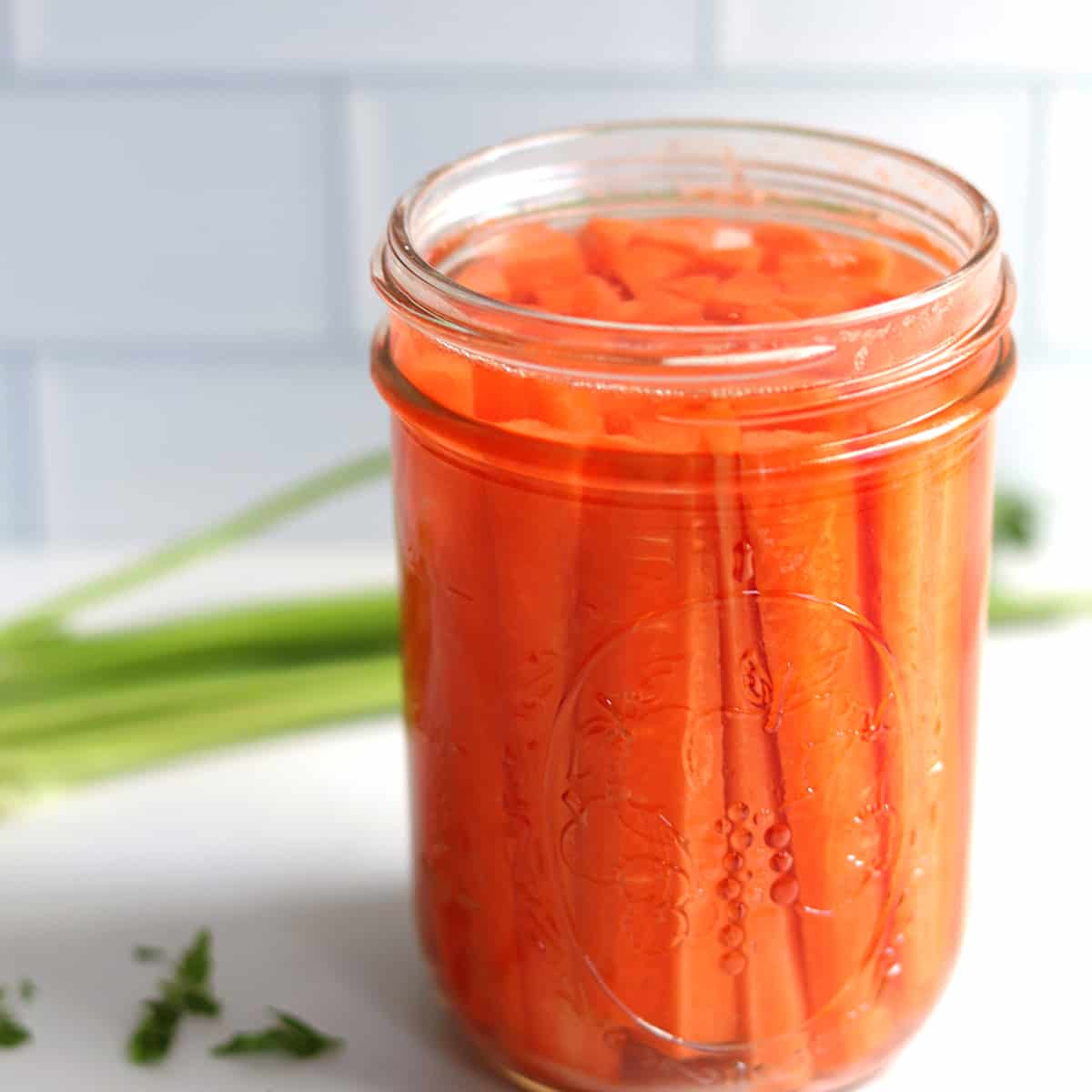
- Place the garlic slivers and ½ teaspoon mustard seed in the Mason jar. Then, hold the jar on its side and pack the carrot sticks into it on their ends to fill it as tightly as possible, making sure they are all about equal height. When it's full, see if you can fit a few more in so that none of them can move (this will help them stay submerged while they ferment without needing a weight.) Note: you likely won't need all of the carrot sticks; save any leftovers for another batch or snacking.
- Sprinkle 2 teaspoons sea salt over the carrots, then slowly pour 1 cup filtered water over everything until the carrots are completely submerged under the water, but leaving a little room at the top of the jar.
- Close the jar and give it a little shake to disperse the salt, then place it in an area that's out of the direct sunlight at room temperature; on a countertop or in a cabinet is fine. If you're not using a fermentation lid, "burp" your carrots by quickly loosening and re-tightening the lid each day to allow any carbon dioxide gas to escape. Open the jar after 4-5 days and take a taste. If you prefer a stronger flavor, keep fermenting and test again in another day or two.
- Once you're happy with the taste, place the covered jar in the refrigerator to end the fermentation process, and enjoy!
Nutrition
Video
Notes
Mason jar: I used and recommend a wide-mouth pint sized Mason jar for this recipe. If you're using a larger jar, please see my how to ferment vegetables guide to precisely calculate the amount of salt to use for your own ferment.
Fermentation lids and weights: If you'd like, you can buy special airlock lids that will help let carbon dioxide gas escape from your ferment. However, they are not essential and a regular lid will work as well. For a regular lid, you'll need to check your ferment daily and slightly loosen the lid and tighten it again to let any built-up gas escape. You can also buy fermentation weights to help keep veggies submerged under water during the fermentation process. As long as your carrots are packed tightly, though, you shouldn't need an additional weight.
Salt: Sea salt and kosher salt work best for fermenting carrots and other vegetables, but other non-iodized salts that are finely ground will work too.
Water: Use filtered, non-chlorinated water when fermenting carrots or other veggies.
Temperature: The ideal temperature for fermentation to take place is around 65-70°F (or 18-21°C) which is room temperature, but a 5°F (or 2°C) cooler or warmer difference is fine as well. Just keep in mind that if your room is on the cooler side, fermentation will be slower, and it will be accelerated in a warmer room.
Troubleshooting: It's perfectly normal and expected to see some cloudiness develop in your ferment, especially as it gets closer to being ready. If you see a white film develop on the top of the water (called kahm yeast), that can also be normal and you can just skim it off when you see it. If you see mold, strange colors or odors that seem "off", though, it's best to discard and try again with a new batch.
Storage: Store for up to 1-2 months in the fridge. Keep them in the same jar and use a regular lid rather than an airlock lid for storage.
