
• Skip to primary navigation
  • Skip to main content
  • Skip to primary sidebar
One Happy Dish
  • About
  • Recipes for One
  • Dinner for One
  • Small Batch Baking
menu icon
go to homepage
  • About
  • Recipes for One
  • Dinner for One
  • Small Batch Baking
search icon
Homepage link
  • About
  • Recipes for One
  • Dinner for One
  • Small Batch Baking
×
Home » Recipes for One » Simple Sides

Small Batch Fermented Carrots (Crunchy & Savory)

by Allison Campbell · Last updated Mar 8, 2026 · This post may contain affiliate links · Leave a Comment

No ratings yet
Jump to Recipe

These crunchy fermented carrot sticks are SO delicious and super easy to make with just a few simple ingredients and ten minutes of prep time needed. (And trust me, the five days of fermentation time is so worth the wait.) 😉 If you've ever wanted to learn how to ferment carrots without making a huge batch, this recipe is for you.

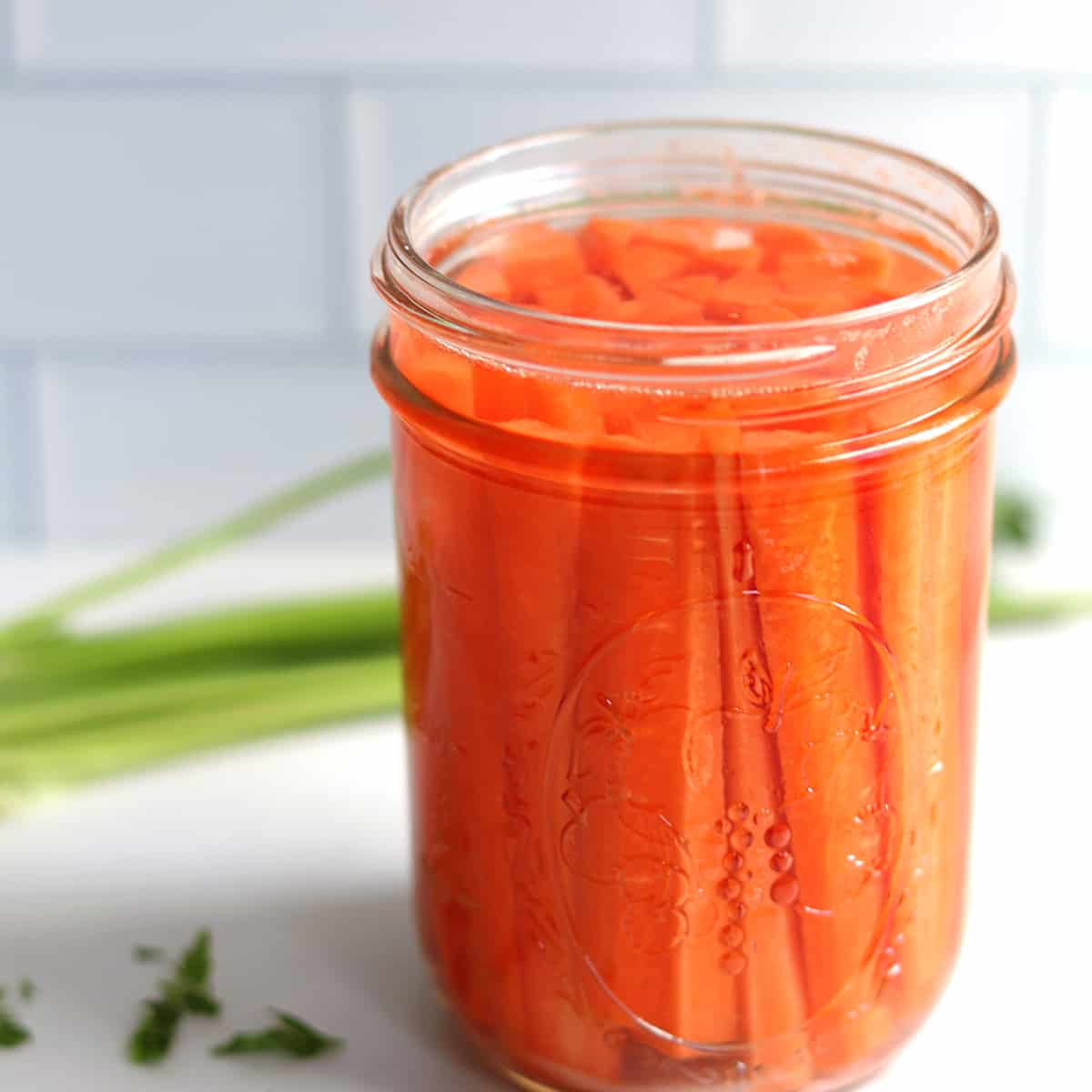
Savory lacto-fermented carrots in a glass working jar on a brown table.

I absolutely love making fermented carrots because they're one of the easiest fermented food recipes to make at home. They're crunchy, naturally sweet and savory, and totally forgiving if your slices aren't perfect (mine rarely are). And if you're cooking for one or just want to have a small jar on hand, this recipe is the perfect place to start.

Small batch fermentation is great because it also lets you experiment with different flavors; maybe garlic one week, ginger or dill the next. It's incredibly rewarding and fun to taste the final result and watch your ferment bubbling along in the meantime. And the process couldn't be easier: a quick salt brine, a little patience, and natural fermentation does the rest.

If you're new to fermentation, see my guide Fermentation 101: How to Ferment Vegetables before getting started.

Add this site as a preferred Google source!
Add

🌿 Ingredients

Ingredients for fermented carrots on a marble countertop.

You'll only need a half a clove of garlic at the most as a little goes a long way here, and I also like to add some mustard seed spice which really adds to the savoriness of this recipe. Not to worry if you don't have one of these, though; you can still make this recipe with just carrots and salt!

For salt, you can use sea salt, kosher salt or any other natural, finely ground salt. Just make sure it doesn't contain any anti-caking agents and is not iodized, as both can affect the success and/or taste of the ferment.

Also, make sure you're using filtered, non-chlorinated water when fermenting carrots or other vegetables.

Pro tip: If you don't have access to filtered water, you can boil tap water first and let it cool in order to remove the chlorine from the water.

See recipe card below for exact quantities.

⚙️ Equipment recommendation

Okay, let's talk tools. For most lacto-fermented vegetable recipes, the items you'll need are actually really simple.

A Mason jar (affiliate link) or other glass jar with a lid is the only real requirement. This is where your veggies will ferment at room temperature, and you can place the same jar in the fridge when they are ready (no need to transfer the carrots.)

If you'd like, you can buy special fermentation lids (affiliate link) that will help let carbon dioxide gas escape from your ferment. However, they are not essential and a regular loosely tightened lid will be fine to allow a small amount of gas to escape. You can also buy fermentation weights (affiliate link) to help keep veggies submerged under water during the fermentation process. As long as you pack your carrots tightly, though, you shouldn't need an additional weight.

You'll want to look for wide-mouth mason jars (as opposed to regular mouth mason jars.) The wider opening will allow for easier access as you place your vegetables in the jar to ferment. Also, it'll be much easier to grab them out for snacking later on. 🙂

In terms of size, pint sized Mason jars are ideal especially if you're just getting started fermenting. If you'd like to make a larger batch, just switch to a quart sized Mason jar and double the ingredients.

📝 Instructions

Freshly peeled carrots on a marble countertop.
Wash, trim and peel the carrots, and peel the garlic.
Sliced carrot sticks on a white cutting board with a light blue ceramic knife.
Cut the carrots into sticks and half of the garlic clove into thin slivers.
Thinly sliced garlic and mustard seeds in the bottom of a Mason jar.
Place the garlic slivers and mustard seed in the bottom of a Mason jar.
Carrot sticks packed in a Mason jar on a marble countertop.
Then, hold the jar on its side and pack the carrot sticks into it to fill it tightly.
Pouring salt over carrot sticks in a Mason jar.
Sprinkle sea salt over the carrots.
Salted carrot sticks in a Mason jar on a marble countertop.
Slowly pour filtered water over the salt.
Salt brined carrots in a Mason jar on a marble countertop.
Keep filling the jar until the carrots are submerged and close the jar loosely.
Fermented carrots in a Mason jar on a white marble countertop with carrot greens in the background.
Test the taste after 4-5 days and once it's to your liking, refrigerate your carrots.

Salt ratio for fermented carrots

A quick side note here on salt and fermentation. Because we're using lacto-fermentation (or wild fermentation) here, we'll need to create an ideal environment so that the Lactobacillus (good) bacteria can grow and crowd out any bad bacteria. And that process is accomplished through a very specific salt ratio of 2-5%.

To learn more about the science behind lacto-fermentation and how the amount of salt in this recipe was determined, see my guide on how to ferment vegetables. But rest assured that you can feel confident using two teaspoons of sea salt for this recipe as written. This will ensure you're within the established salt ratio window in order to have predictable results with your ferment.

📖 Variations

The possibilities are endless when it comes to fermented vegetable recipes! Here are a few delicious variations you can try with carrots:

  • Fermented ginger carrots - substitute the garlic with a little shaved or grated ginger for a delicious twist
  • Fermented dill carrots - substitute the mustard seed for a few sprigs of fresh dill, with or without the garlic
  • Fermented garlic carrots - as written, this recipe does call for half a clove of garlic, but feel free to add more if you'd like a stronger garlic flavor (just keep in mind that a little really does go a long way in a ferment)

You can also mix up the carrots themselves:

  • Fermented baby carrots - feel free to use baby carrots (just make sure to wash before use); you'll probably want to use a fermentation weight unless you can pack them in your jar tightly enough
  • Fermented shredded carrots - shred a bunch of carrots by hand or in a food processor, or use a mandoline to slice thinly and prepare the recipe as written (use a fermentation weight to keep the carrots submerged); I love these on a burger or some avocado toast

🥧 Serving suggestions

I absolutely love snacking on homemade fermented carrots any time of the day. They also make a great add-on to a lunch for one (my favorite pairing is with this tuna sauerkraut sandwich.)

If you love these carrot sticks and want to go further into the wonderful world of fermented foods, I highly recommend trying some homemade sauerkraut next. 🙂

💭 FAQ

What do fermented carrots taste like?

Fermented carrots have a mild salty and savory taste and crunch similar to pickles but a bit sweeter due to the natural sweetness of the carrots.

How long do I ferment carrots?

The fermentation time required for carrots will vary depending on the specific salt ratio used and temperature of the room, but a good guideline is about five days, plus or minus a day or two.

Why does my ferment look cloudy or have a white film at the top?

You may see some cloudiness develop in your ferment and that's normal. It's also normal if a white film develops on the top of the water (called kahm yeast); simply skim it off if you see it. If you see mold or a strange appearance or odor, though, that's a sign that you should discard the ferment and start with a new batch.

How long do fermented carrots last?

Homemade fermented carrots should last up to at least one to two months in a covered jar in the fridge. You'll know that they are still fresh if they have a savory and pleasantly sour aroma.

🍳 Recipe

Fermented carrots in a Mason jar on a white marble countertop.

Small Batch Fermented Carrots (Crunchy & Savory)

Allison Campbell
No ratings yet
These easy fermented carrot sticks are crunchy, tangy and delicious! Learn how to ferment carrots at home with just a few basic ingredients.
Save RecipeSaved! Print Recipe
Prep Time 10 minutes mins
Fermentation Time 5 days d
Total Time 5 days d 10 minutes mins
Servings: 6
Course: Side Dish
Cuisine: American
Calories: 33
Ingredients Equipment Method Nutrition Video Notes

Ingredients
  

  • 1 pound carrots
  • ½ clove garlic
  • ½ teaspoon mustard seed
  • 2 teaspoons sea salt or kosher salt, finely ground (see notes)
  • 1 cup filtered water (see notes)

Equipment

  • vegetable peeler
  • cutting board
  • chef's knife
  • Mason jar or other wide-mouth pint sized jar, with lid
  • fermentation lids optional (see notes)
  • fermentation weights optional (see notes)
Prevent your screen from going dark

Method
 

  1. Wash, trim and peel the carrots. Peel the garlic. With clean hands, use a sharp knife to cut the carrots into sticks and half of the garlic clove into thin slivers.
    1 pound carrots, ½ clove garlic
  2. Place the garlic slivers and mustard seed in the Mason jar. Then, hold the jar on its side and pack the carrot sticks into it on their ends to fill it as tightly as possible, making sure they are all about equal height. The carrots should be about as high as the largest rim on the Mason jar. When it's full, see if you can fit a few more in so that none of them can move (this will help them stay submerged while they ferment without needing a weight.)
    ½ teaspoon mustard seed
  3. Sprinkle the salt over the carrots, then slowly pour the water over everything until the carrots are completely submerged under the water, but leaving a little room at the top of the jar.
    2 teaspoons sea salt, 1 cup filtered water
  4. Close the jar loosely with lid and place in an area that's out of the direct sunlight at room temperature; on a countertop or in a cabinet is fine. Open the jar after 4-5 days and take a taste. If you prefer a stronger flavor, keep fermenting and test again in another day or two.
  5. Once you're happy with the taste, place the covered jar in the refrigerator to end the fermentation process, and enjoy!
Nutrition

Calories: 33kcalCarbohydrates: 7gProtein: 1gFat: 0.3gSaturated Fat: 0.03gPolyunsaturated Fat: 0.1gMonounsaturated Fat: 0.1gSodium: 829mgPotassium: 245mgFiber: 2gSugar: 4gVitamin A: 12630IUVitamin C: 5mgCalcium: 28mgIron: 0.3mg

Video

Notes

Fermentation lids and weights: If you'd like, you can buy special fermentation lids that will help let carbon dioxide gas escape from your ferment. However, they are not essential and a regular loosely tightened lid will be fine to allow a small amount of gas to escape. You can also buy fermentation weights to help keep veggies submerged under water during the fermentation process. As long as your carrots are packed tightly, though, you shouldn't need an additional weight.
Salt: Sea salt and kosher salt work best for fermenting carrots and other vegetables, but other non-iodized salts that are finely ground will work too.
Water: Use filtered, non-chlorinated water when fermenting vegetables or other foods. If you don't have access to filtered water, you can boil tap water first and let it cool in order to remove the chlorine from the water.
Temperature: The ideal temperature for fermentation to take place is around 65-70°F (or 18-21°C) which is room temperature, but a 5°F (or 2°C) cooler or warmer difference is fine as well. Just keep in mind that if your room is on the cooler side, fermentation will be slower, and it will be accelerated in a warmer room.
Troubleshooting: It's perfectly normal and expected to see some cloudiness develop in your ferment, especially as it gets closer to being ready. If you see a white film develop on the top of the water (called kahm yeast), that's also quite normal and you can just skim it off when you see it. If you see mold, strange colors or odors that seem "off", however, it's best to discard and try again with a new batch.
Storage: Fermented carrots will stay good for up to 1-2 months in the fridge.

Did you make this recipe?

I'd absolutely love for you to leave a review!
Fermented carrots in a Mason jar on a white marble countertop.

More Fresh & Simple Sides

  • A white bowl filled with roasted sweet potato cubes sits on a white napkin next to a silver fork.
    Small Batch Oven Roasted Sweet Potatoes
  • A white bowl filled with cooked wild rice sits on a tan napkin with a dark blue plaid pattern.
    Small Batch Wild Rice (2 Servings)
  • Dill pickled deviled eggs on a white serving plate.
    Dill Pickle Deviled Eggs (Easy Small Batch Recipe)
  • Homemade cranberry sauce in a glass serving dish.
    Classic Cranberry Sauce
146 shares
  • Facebook
  • X

Stay updated

Get new recipes via email.

Reader Interactions

Leave a Reply Cancel reply

Your email address will not be published. Required fields are marked *

Recipe Rating


Primary Sidebar

Headshot of Allison Campbell, food blogger at One Happy Dish.

Hi, I'm Allison! I share fresh, fun single-serve and small batch recipes (without the leftovers.) 🎉

More about me →

Banner with image of 3-ingredient peanut butter cookies.
A plate with four small slices of French toast sprinkled with powdered sugar, served with two orange wedges and a fork. Text above reads Single-Serve French Toast, and below: Get the recipe with an arrow.

Footer

↑ back to top

About this Food Blog

  • About

Policies

  • Accessibility Policy
  • Editorial Policy
  • Privacy Policy
  • Terms of Service

Contact Me

  • Contact

As an Amazon Associate I earn from qualifying purchases.
Copyright © 2026 One Happy Dish. All rights reserved.

Rate This Recipe

Your vote:


A rating is required
A name is required
An email is required